
Sales Contract Review in Thailand

A sales contract review in Thailand is a critical legal step in any property or commercial transaction. Whether the transaction involves real estate, business assets, or high-value goods, a properly reviewed sales contract protects the interests of both buyers and sellers. Thai law places significant importance on contractual clarity, legality, and enforceability. Failing to conduct […]
Intellectual Property in Thailand

Intellectual Property (IP) plays a vital role in Thailand’s modern economy, supporting innovation, creativity, and commercial growth across multiple industries. As Thailand continues to position itself as a regional hub for trade, technology, manufacturing, and creative industries, the protection and proper structuring of intellectual property has become increasingly important for businesses, entrepreneurs, and investors. Understanding […]
Buying Property in Thailand

Thailand has long been one of Southeast Asia’s most attractive destinations for property buyers, investors, and expatriates. With its stable legal framework for real estate transactions, diverse property market, and high quality of life, buying property in Thailand offers numerous advantages for both Thai nationals and foreign investors. Understanding these benefits helps buyers make informed […]
Property Title Transfer in Thailand

Property title transfer in Thailand is a crucial legal process that formally changes ownership of land or real estate from one party to another. Whether the transaction involves residential property, commercial land, or a condominium unit, the transfer must comply with Thai laws and regulations to be legally valid. Understanding the title transfer process helps […]
Property Due Diligence in Thailand

Property due diligence in Thailand is a critical step for anyone planning to purchase real estate, whether for personal use, investment, or business purposes. Thailand’s property market offers attractive opportunities for both Thai and foreign buyers, but it also presents unique legal, regulatory, and practical challenges. Conducting thorough due diligence helps buyers identify risks, confirm […]
Property Leasehold in Thailand

Property Leasehold in Thailand. Leasehold is the practical, legally recognized route for long-term control of land and houses in Thailand—especially for foreigners who cannot hold freehold land. But “leasehold” in Thailand is a technical regime with strict statutory limits, important registration rules, and specific financing, tax and exit consequences you must plan for. Below I […]
Property Mortgages in Thailand

Property Mortgages in Thailand. Mortgages are the main form of secured lending against immovable property in Thailand. They are registrable real rights: the lender takes a non-possessory security interest which must be created in writing and registered at the local Land Office to bind third parties and establish priority. Below I explain the legal mechanics, […]
Title Deeds in Thailand
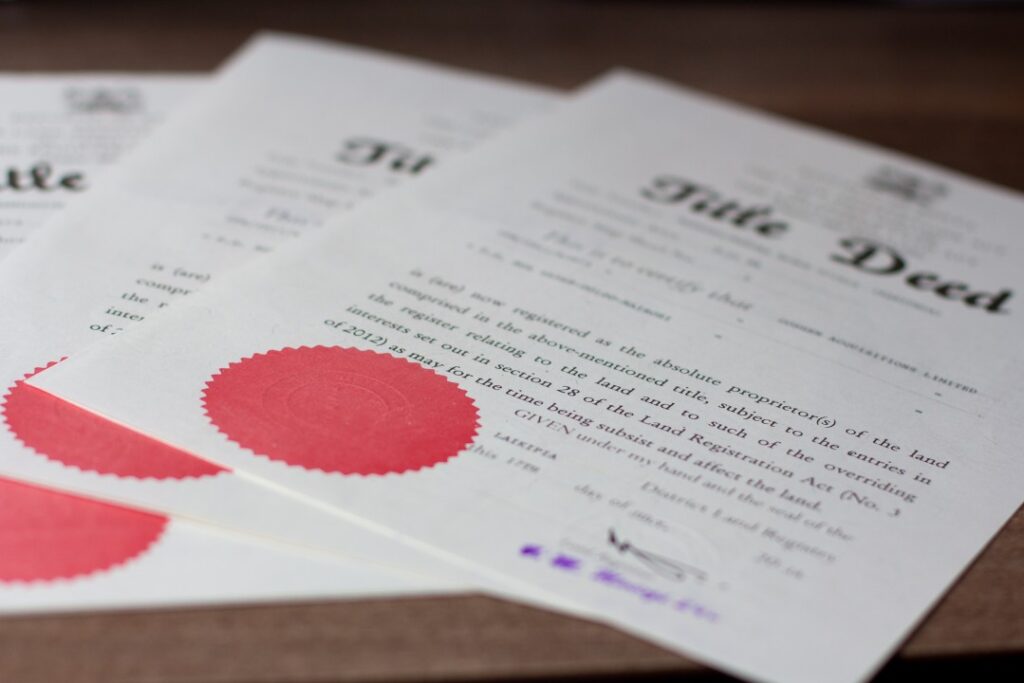
Title Deeds in Thailand. In Thailand, title deeds (Chanote and other forms) are more than mere evidence of land ownership; they define the legal status, permissible use, transferability, and encumbrance rights associated with real property. The country’s land tenure system is highly codified under the Land Code B.E. 2497 (1954), with title documents issued and […]
Usufructs in Thailand
Usufructs in Thailand. In Thailand, a usufruct is a legal right that allows a person (the usufructuary) to use and benefit from another person’s property for a set period, typically up to 30 years or for the usufructuary’s lifetime. Usufructs provide foreigners with a secure way to use land without ownership, often for agricultural, residential, […]
Escrow Accounts in Thailand

Escrow Accounts in Thailand. Thailand’s property market continues to attract both domestic and foreign investors. While exciting, real estate transactions can involve significant financial risk. Escrow accounts offer a valuable tool to mitigate this risk and ensure a secure exchange of funds. What is an Escrow Account? An escrow account is a neutral third-party account […]